Final Project rationale

For my final project, I decided to discuss how the lore and story of Overwatch is told and explained outside of the game instead of actually being explained within the game itself. The main reason I chose this is because Overwatch is one of the forms of media that I am the most familiar with and I honestly was having trouble trying to pick a topic for the project, that was at least until we started talking about video games and then it all clicked for me. My main goal for this project was not to tell the story of Overwatch, since that would take a really long time, but I wanted to show that the story can be accessed easily through different forms of media, and the game does not even have to be owned in order to get involved in the story.  

One of the biggest inspirations for my project was Childish Gambino’s Because the Internet, besides the fact that it was the best example of a transmedia project that we looked at in class, it showed the most examples of different forms of media making up the total package. I did not have the time to create more things to add to my project, I really was only able to create a blog and different QR codes because of all of my other schoolwork that I have going on, but I was able to compile different forms of outside media to help make up my project. The main thing about Because the Internet that inspired me was that when the different parts of it were consumed separately, it could still be enjoyed by itself, meaning that all of the pieces were necessary for the full story, but there was enough content within the separate elements that they could be advertised separately and not negatively affect the total package. 

One element that I struggled figuring out how to use was my physical element, since I was mainly discussing a video game, which is usually always in a digital form. I was originally planning on saying that playing the game would be my physical element, since you do have to play the game to experience the gameplay, but it felt like too much of a cop-out, so after discussing it with you, and deciding that using QR codes and my actual loot box, it would be a lot easier to simply just do that instead of just assuming the consumer has, or would play the game. Besides that, I did not really struggle coming up with any of the elements, just finding the actual time to work on them was the only other real issue that I encountered.  

As for other inspirations from the class, I did take inspiration from the other transmedia projects that we looked at in class, but not because I enjoyed them, but because I did not like them that much and I wanted my project to be different from there’s. In my initial plan for my project, I wanted to do an audio file and maybe even record my own gameplay for it, but because of my time restraints, I was not able to create either one of those. The main things that I did not really like about the other transmedia projects that we looked at besides Because the Internet, is that it seemed like it could have simply just been made into a video instead of taking all of the extra effort to make it a transmedia project. For both Hollow and Snow Fall, it really just felt like they could have been documentaries instead of these transmedia projects. I do think that my project turned out a little bit better than those two examples, but I think it could have turned out better than it did.  

To talk about my actual project a little bit, what I ended up doing was creating multiple QR codes with links to different videos and different comics, and then I also created a blog post with different explanations about what the QR codes lead to and what the importance of the videos and comics are. All of the QR codes are stored inside of a real loot box, which is an item that is from Overwatch that the player can open to unlock different cosmetics and other things like that, so I thought that it would be cool to have the QR codes kind of act like a replacement for the traditional items from the loot boxes. For the most part, I do like the way my project turned out, but I do wish that I could have created more things for the final product, but I guess it is just something that I will have to deal with. 

For my project, I did not really have the intention of trying to remix anything in order to create it, but I guess that since I used different aspects that were created by others and shaped them into my own project, it sort of did end up being, not a remix, but an homage instead. To call back to Meg Shields’ “Imitation Game: The Difference Between Homage and Plagiarism”, the reason I bring this up is because I do believe that my project does not fall into either the homage or remix category, but I definitely do not think that it is plagiarism. The sources that I used are incorporated into my project with a description given, plus I do not actually claim to have created anything that I am showing my audience. The reason that I do not think it is either an homage or a remix is that I really am basically putting together a small compilation of different media that Blizzard has put out into the world, and, while I did create my own aspects of the project, such as the blogpost and the QR codes, I did not really create anything that directly remixes any part of Overwatch. I suppose my project could be looked at as kind of an homage because it puts everything together for the viewer to easily work through, but I would say that it is mostly just a kind of compilation. 

All and all, I would say that I am pretty happy with how my final project ended up turning out, I do wish I could have been more creative with it and made it a little less boring, but there is nothing I can do about it now. It was nice to have a final project that was challenging in a way that did not make it suck, and I am glad that we got to create different things and expand on our skills and think about media with a different mindset throughout the semester. This was probably my favorite class that I took this semester and I am grateful that it forced me to think about literacy in a non-traditional way, because of this, it makes it easier to look at subjects outside of my media classes with a new mindset. 
The Lore of Overwatch

Ever since Overwatch was released, there has been a strong following surrounding the lore and story of the game, but unlike most games, the story is mostly told outside of the game. For Overwatch, a majority of its story is told by the use of animated shorts that are uploaded to YouTube and comics that focus on one character, or on a certain event that takes place. The interesting thing about this is that when actually playing the game, the player isn’t required to have any knowledge about the story in order to play the game, there are interactions between the characters that are only explained by the lore, but they are not vital to the core gameplay.

Because of the nature of its story, I wanted to give a few examples of the different forms of media that Blizzard uses to tell Overwatch‘s story. So, in this transmedia project, QR codes will be provided from the lootbox, so all you gotta do is read aling scan whatever QR code I tell ya to.

To intorduce the world of Overwatch, Blizzard, the creators of Overwatch, released a cinematic trailer to introduce some of the characters and the world of Overwatch. The video introduces questions that are either answered later, or are still not answered to this day.

SCAN QR CODE 1 FOR CINEMATIC TRAILER

Now that we have been introduced to9 some characters, it is time to see some of the gameplay and meet some more characters. Here in a gameplay trailer for Overwatch. The video gives the viewer a good idea of what the actual gameplay of the game itself. the game itself has little bits of story tossed in, but they are not vital to the gameplay, so if the player has no interest in the story, then they will most likely receive no information about the story. However, if the player wishes learn more about the story of the game, then there are plenty of options available.

SCAN QR CODE 2 FOR GAMEPLAY TRAILER

In the gameplay trailer, there is an interaction between the characters Hanzo and Genji where Genji calls Hanzo his brother. Though this is unimportant to the gane, this is an interesting factor of the story and Blizzard knows this, so they created the animated short “Dragons” that helps explains their storry a little better.

SCAN QR CODE 3 FOR “DRAGONS”

In this video, the character Sombra is introduced, as well as showcasing other characters. Just like all of the other media we’re looking at, this has no importance in the game, but it is still interesting lore that is valuable to those that are interested in the story enough to go out of their way to watch the animated short.

SCAN QR CODE 4 FOR “INFILITRATION”

There are a lot of different animated shorts that Blizzard has released, and they are my personal favorite way of learning the lore, but along side the videos, Blizzard has also released numerous comics that go even deeper into the lore. The first comic we’re gonna look at is called “Destroyer. In this comic, we get more background information about the character Torbjorn as he goes on a mission to take down a huge enemy.

SCAN QR CODE 5 FOR “DESTROYER”

In the next comic, the characters Soldier: 76 and Ana are searching for each other, but they end up finding something else that they weren’t looking for.

SCAN QR CODE 6 FOR “OLD SOLDIERS”

There are a lot of different videos and comics that have been released and they all add a lot to the story of Overwatch, but if we were to look at all of them, we would be here for a long time, so these have just been a way to dive into the story without going in too deep. If you did become interested in the story of the game, then any of the videos or comics we looked at today should have links to other videos and comics.

Final Notecard

For the first question, I decided to talk about the second and third. The second one is “Understand how writing is mobilized across multiple spaces and contexts and how the affordances of writing depend on the media involved”. I would say that I have definitely increased my understanding of how writing across multiple spaces works, and I did this because of how many times we had to interpret different forms of media in different ways and how we had to discuss a lot of different topics with our groups and were forced to think critically about it. For the third outcome, it is “Thoughtfully engage with, analyze, and contest theories of media, communication, composition, rhetoric, literacy, and design”. I think that I achieved this because in almost every class, we had different discussions about whatever thr reading was or whatever it was that we were doing in class. I did really enjoy this because I like talking about different forms of media with others because I like explaining what I think something means and learning what others think about something. I did not really have a favorite text in the course, but I did have a favorite section. I really enjoyed the classes where we talked about remixing and if certain media was either ethical or unethical, and since I like creating content that is based on other forms of media, it was interesting learning about what makes something a remix or an homage. It was not really a text, but it was an example that we looked at in class, which as the Nicole Arbour video that we watched that was a parody of “This is America”. For the most part, I enjoyed most of the activities and projects that we did in class, the only thing that I can think of that kind of annoyed me was when we had workshop days and we had to get up to look at other projects. There is not anything wrong with this, and I understand why we did it, but I guess it was just kind of annoying to me personally.

Transmedia Blogpost 2

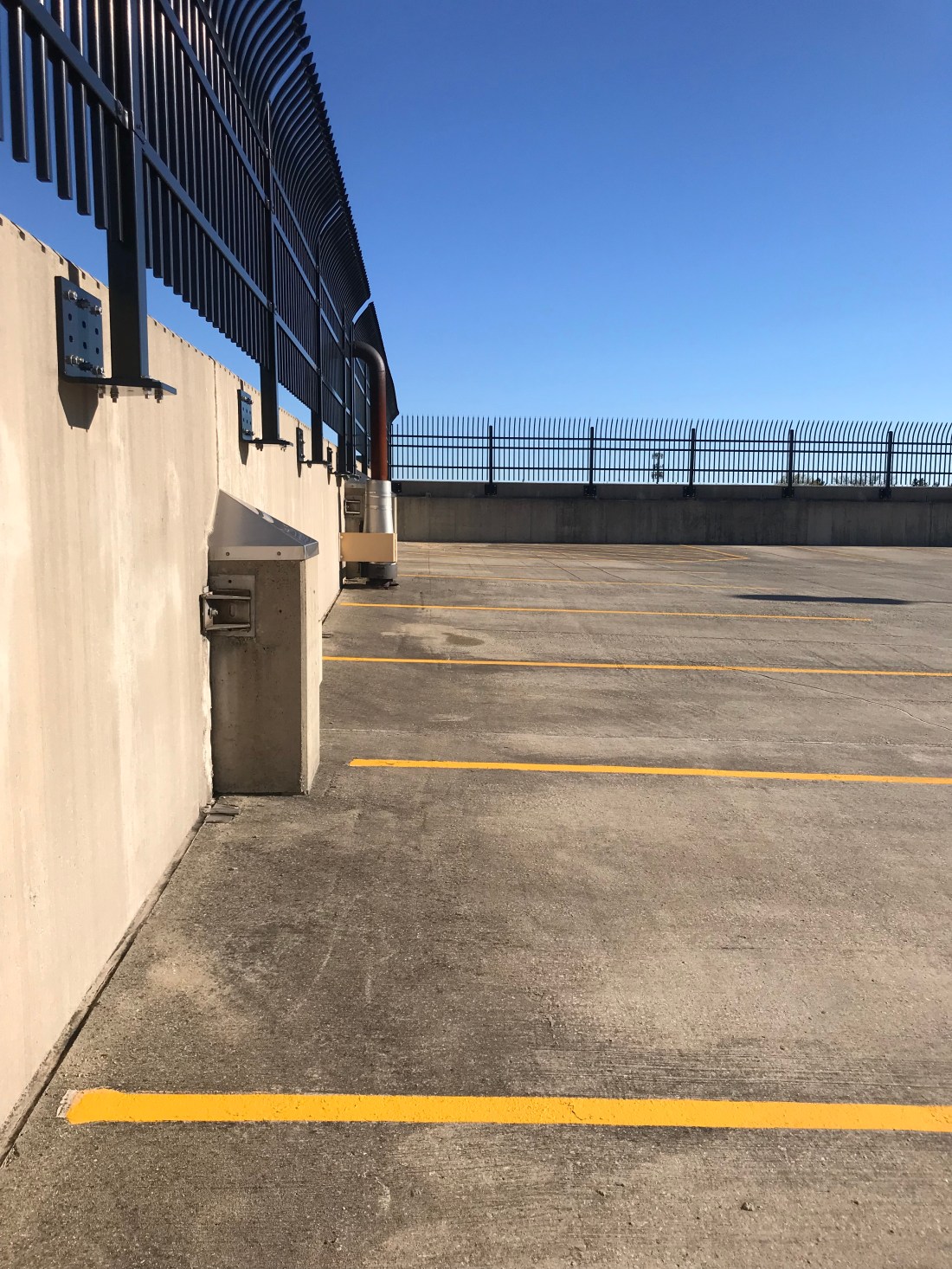
I downloaded the geocaching app onto my phone, and it was actually a lot easier to navigate than I expected it to be. It was a lot more user-friendly than the website seemed to be, but that might have just been my person preference of using my phone instead of a computer. I actually never found the geocache that I was looking for, though I figured out the clue and found the location that it was supposed to be in. It is supposed to be on top of a parking garage across the street from one of the student gyms, but I felt really sketchy looking around up there, so after ten minutes of looking, I gave up, but I might go back and look for it tomorrow. IT was interesting to look for because, after looking on the app, it seemed like a community effort to find it and I thought that was really interesting. The geocache that I was looking for was supposed to be in honor of someone who found 1000 geocaches, which was cool, because it shows that the community supports and respects each other. I thought I would not like looking for the geocache, but I actually kind of enjoyed looking for it, and if it were not for the kind of sketchy feeling I got from the area, I might have continued to look for it, and I might go look for some in the future. If I were to use a geocache for my project, I would plant it someone that is integral to my project, like a specific building or tree or something. I probably will not use one for my current project, but it would actually be kind of interesting if one of my classmates created one that was integral to their project. 

Transmediation Blog

I had listened to this album before our classes this past week, but I never knew that the album was a part of something bigger like it is. To be honest, there really is not any much about this that I do not really like, I already really liked Childish Gambino and Donald Glover, I know they are the same person, but I count them as two different people because they are credited differently for their respected endeavors. I do not really think that this is the immediate future of entertainment, mostly because it requires the consumer to have the desire to learn more about and to what to dig deeper into the media itself. I do think that it has the potential to be a big source of entertainment to those that are willing to put in the effort to find out what the transmedia product provides. I think that it requires too much effort and energy from the artist to create for it to be deemed worth it, since they also have to create, at least in this case, a short film, screenplay, ad campaign, and many other things, along with the musical album that they already intended on creating. Like I said earlier too, the effort that is required from the intended audience can be considered just too much, since it is pretty common for people to want to put in as little amount of effort as possible, but still expected a lot in return. So, with those two things combined, I think that transmedia entertainment has the potential to be big, especially if it finds the audience that is willing to put the effort in, but if they do not find that audience, then I do not think it will be able to succeed, at least it will not be able to succeed as easily. 

Major Project 2

For my project, I wanted to create a video that discussed why people enjoy listening to music that is inspired by or just a straight up remix of a song from a video game. Another thing that I decided to focus on while I was recording for my video was the target audiences for the specific songs that I focused on. Now, I did not just pick this topic for no reason, I actually listen to this time of music more often than I would probably like to admit. So, because of that, I had a few artists that I wanted to focus on. Those artists were Starbomb, JT Music and NateWantstoBattle, with Starbomb being my favorite of the bunch. Starbomb is the most popular out of the three artists and, like I said, they are my personal favorite, and because of that, I decided to use two of their songs, instead of just one, like I did with the other artists. For Starbomb, I decided to use the songs “It’s Dangerous to Go Alone” and “Luigi’s Ballad”, both of these songs have themes that can be considered very inappropriate, but that’s kind of the part that makes it unique. The songs involve characters from the games Legend of Zelda and Super Mario Brothers, and because of this, it makes it more entertaining that those characters, which are usually portrayed as being kid friendly, are partaking in these inappropriate behaviors. Besides the crude content, the instrumentals of the song are actually very well done and have a professional quality to them.  

One of the other artists that I talked about, JT Music, usually makes songs about games, movies and TV shows, and for this project, I decided to use their song called “Cuphead Rap”, which is pretty self-explanatory, it is just a song about Cuphead. This is my favorite song by them, and I really like the instrumental on the song. It has a very nostalgic feel to it and really sounds like a modern version of a 30’s cartoon, which is what Cuphead is stylized after. I picked this song because it kind of contrasts the theme of the other two songs, which were very sexual, this one, however, does not really have a theme and is pretty much just a song from the perspective of the characters from Cuphead. For the last song, I wanted to talk about a song that was not an original song, so I decided to talk about NateWantstoBattle’s cover of a song from Sonic Adventure 2 called “Escape from the City”. The original song is already pretty influenced by rock, but this cover adds a more metal sound to the rock theme. I really like this genre of music, so I naturally really like this cover, it also helps that I already liked the original song.  

To create my project, I used my Logitech webcam to record myself and my Blue Snowball microphone to record my audio. For editing, I used Adobe Premier Pro and for the actual video clips that I used, I used a website to download the video from YouTube and then I edited them down to the specific part that I wanted to use in my video. I originally had a more detailed video planned out and actually got about a third of the way through editing, but it was just taking too much time to edit. I really did not want to, but I had to start it over and make it more simple and easier to edit just so I can get it done on time. I do intend to finish editing the original video that I had started, but I might just completely restart and go even more in-depth on it because I plan on uploading it to my YouTube channel.  

I would say that my video was an ethical remix because all I did was talk about why people could like the music and what the target audiences are. I had no intention of slandering the artists or making fun of the songs, or anything along those lines. I can see how I could have made it unethical, and it might have actually been more interesting if I had talked about post sides of the spectrum, but with the time constraints that I had because of work and other schoolwork, I just tuck to my original, ethical plan. For my redone and more in-depth video that I want to make, I might add the opposing side to it just so I can connect with both audiences. 

Scavenging Blog Post #2

I would say that Kalgren’s video could be considered both ethical and unethical. You could give the argument that the video is ethical and that he just made it for fun, but you could also give the argument that the video’s intention is to point out that Star Wars is actually not as original as many people tend to believe, and that it is not as impressive because it could be considered plagiarism, because, as far as I know, no acknowledgment of the work that inspired them. As far as Star Wars, I would say that most of it could be considered ethical, but there are certain things in the franchise that could be considered unethical. Some scenes in the films are basically ripped directly from other films or shows and they do not acknowledge it at all, as far as I know.  

At the very end of the video, Kalgren credits all of the films that that he samples and has them in order. So, I would say that he does a very good job at crediting his sources and that there is not really anything else that he needs to do.  If we compare it to Star Wars, they do not really credit their inspirations and they just kind of just use it because they want. 

One way that they used the material to create something unique is that, even though they recreated scenes from Star Wars, but they used different scenes from other films in order to do it. Despite not using any original content, they were still able to create something that could be considered unique. Even though it could be considered unique, the artist still has to rely on the fact that the scenes are really similar, if not exactly the same, in order to create the effect that the artist was going for. 

Independent Resource Blog

For the resource, or resources, that I chose, I wanted to discuss the different programs that students can use to edit audio. I am very interesting and have fun editing audio and video, so this topic is kind of close to my heart. The main audio editing software that I use is Adobe Audition, which is my favorite that I have used and the one that I am the most comfortable with. The only downside to Audition is that it is expensive, costing basically $250. That may seem like a lot, and it is, but for $250, you do not only get Audition, but you also get all of the rest of the apps from the adobe Creative Cloud, which includes Photoshop, Illustrator, Premiere Pro and various other apps. Another software that is popular is Audacity, but I personally do not really like Audacity, mostly because I used Audition first and got used to it. Audacity is good for many students because it is free and usually gets the job done for the projects in WAM. The thing that I do not like about Audacity is the interface, it is very old looking and kind of hard to navigate, but besides that, it is perfectly fine for most students. For a couple of other programs that students in WAM can use, GarageBand and iMovie are free and pretty easy to use. The only problems with these programs are that you only get them for free if you own an Apple product, and iMovie is technically a video editor, but it is really easy to edit audio in it, so that is why I included it. I have never actually used Garageband, but I know people that have, and they have said that is pretty easy to use, and with it’s easy accessibility, I had to include it on my list 

Scavenging Blog Post #1

For the world of music, almost everything, if not everything, is derivative of some other artist, or song, a voice clip, or even just a sound. For the most part, in the world of music, it is typically deemed “okay” to sample an artist or a song if proper credit is given, or if the thing that is being sampled is changed and altered enough so that it does not really resemble it anymore. At the University of Illinois, professors usually encourage having different sources and to make sure that we incorporate them into our writing, but usually this is to a certain extent. If we use excessive quotations or use a lot of paraphrasing in our writing, then a lot of professors usually get upset that we are not being original enough. Depending on the types of classes that the student is in, adopting a looser version of copying things could be beneficial to the students. The term “plagiarism” carries a lot of negative feelings towards it, but the terms “sampling’ and “influence” are a lot more forgiving, so if even if these words were incorporated into the classes, it could help students become more creative, but only if the guidelines are made clear to them. When Guy Raz is talking to Kirby Ferguson, he says that he does not think there is an original idea left in the world and that humanity is not capable of coming up with an original idea anymore. This may sound kind of negative, but it does not mean that we cannot invent anything, but that we just have to rely on the ideas and designs that we have already created. When Raz is talking with Johanna Blakley, they spend the whole time discussing the way all fashion is influenced and she also talks about how no idea is original and they all are designs based off of preexisting things.  I thought this was interesting because the worlds of fashion and music, despite being so different, share the common element of influence and sampling. 

Major Project 1

The idea that I had originally had for this project ended up requiring a lot of time to do and was actually kind of hard to incorporate into the topic of discourses, so I ended up choosing my current topic. My main goal for this project was to show the shock that can come from going to a rather isolated situation that is homeschooling, to a crowded, highly social environment that is public schooling. I really enjoy making videos, but for this project, I decided that it would be best for me to create a podcast because of the time constraints I had, and I also did not think that I would fine enough clips to go with my video, so a podcast ended up just working out for me.  

To create my project, I used Adobe Audition to edit all of my audio clips and used my Blue Snowball microphone to record all of my voice overs. Since my podcast takes the form of a podcast, I wanted to get some relaxing music go to behind my voice, so I decided to take some music from one of my favorite game series, Pokémon. For a few of the reading/watching assignments that we had in class, I would say that my favorites were definitely the videos and the podcasts that we had to watch and listen to and this was one of the reasons that I decided to create a podcast. My favorite podcast that I listened to was probably “Yo, Is This Racist?”, this was my favorite because, despite having a rather serious topic, the hosts were laid back and charismatic, which is how I tried to structure my own podcast ( “Language Evolves (w/ LeVar Burton).” . I really do not like when a podcast or video is really monotone and boring, despite having an interesting topic, so I tried my best to make sure that my podcast did not end up that way.

For my topic, it was actually very personal to me because of how much this change from homeschooling to public school affected my life. Because I was homeschooled, you could say I was a part of a homeschooling discourse, but it mostly felt like I was not really a part of any discourses at all, which is why the change to public school was so stressful, because I was thrown into a world of numerous discourses and was forced to either learn and adapt, or be considered an outcast. This is where I drew one of my connections to one of the texts that we read for class, that being Marlene Martinez’s “Tongue of Lead”. The thing that I related to the most in this was the subject of feeling like an outcast in school, though it was for a slightly different reason than Martinez (Martinez, M). For Martinez, the cause for her feeling like an outcast was her not knowing the language that everyone around her could speak, but for me, my reasoning for feeling like an outcast was because I was the new kid in a new, public school for the first time, so I naturally felt like it was somewhere that I did not belong. Like Martinez, I eventually outgrew feeling like an outcast after learning and becoming accustomed to the different discourses that I was exposed to, but it took me a lot less time to do this than Martinez did, it seems.

In James Paul Gee’s essay “Discourse, small d, Big D”, he says “Early in life, we all learn a culturally distinctive way of being an “everyday person” as a member of our family and community”( J., Gee ). I picked this out because, while I was exposed to a family discourse like a normal child, I did not have a traditional “community” discourses to be exposed to for most of my childhood. While I was exposed to a homeschooling community for little bit of my life, it did not really affect me as much as the public-school community did. This community discourse did not feel as important to me when I started this project, but after finishing it, I can see how important it is in shaping the way a child develops.

All in all, I would say that the experiences I had, although they were somewhat negative, did help me in my life in the long run. They gave me the experiences that helped me learn how to adapt to future discourses that I would have to learn in my future jobs and in college. 

Martinez, M. (n.d.). Tongue of Lead. Retrieved March/April, 2019. 

J., Gee. (n.d.). Discouse, small d, Big D. Retrieved February/March, 2019. 

“Language Evolves (w/ LeVar Burton).” How to Apply Ethics to Everyday Life? with Ryan Huber, Episode #61 of Getting Curious with Jonathan Van Ness on Earwolfwww.earwolf.com/episode/language-evolves-w-levar-burton/